Posts

The Spring Fever

Image
  The Spring Fever P.K.Ghatak, MD No.53. We wait so impatiently to usher in the spring at the end of winter. Then we welcome Easter with a fanfare; followed by egg hunts, costume parades and lovely family dinners. Seasonal allergy sufferers hate the arrival of the spring because it is also the beginning of their period of misery of sneezing, coughing and not feeling well and unable to join the rest of the family with outdoor activities. The bursts of outdoor activities, festivities and entertaining is not only limited to humans but also by the plant and animal kingdoms. The plants initiate the process by a burst of colors, flowers and new leaves. Plants sense the arrival of the spring by judging the lengthening of the day and not by the thawing of snow due to increasing temperature. The role of eyes: Retina. The retinae of the eyes contain the light and color sensors; these are rods and cones respectively. They are connected to a layer of bipolar cells. The optic nerve originates f...

Winter Blues

Image
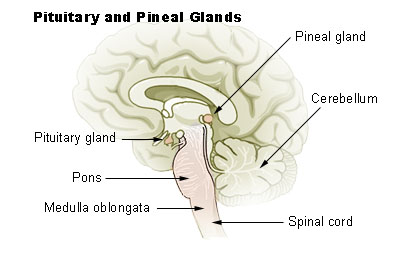
  Winter Blues. P.K.Ghatak, MD No. 52. Winter blue is one of these shades of blue colors. Winter blues is a temporary phase of depressive mood in the winter months. It is not a disease. It is a fairly common feeling in the winter, lasting only a short period of time and clearing spontaneously. Winter blues is more common in women and generally follows a specific event, stress of holidays or missing a loved one. This sad mood does not interfere with normal functioning of daily activities of the individual. Some experts think winter blues is an early phase of an illness known as Seasonal Affective Disorder (SAD). Unlike winter SAD, some may feel SAD in summer months. The real cause of SAD is not known. It is linked with increased production of melatonin from the pineal gland in the brain, producing prolonged periods of sleep and an additional reason for decreased concentration of serotonin in the brain. Reduced serotonin produces decreased concentration ability and alertness. Winter ...

Making a New Year Resolution.

  Making a New Year Resolution: P.K.Ghatak, MD No.51. All Internet searches invariably use AI (artificial intelligence). The process is fast, and one can get an instant answer but whether the information so obtained, is biased or tainted that remains hidden. Not having a person standing behind providing information should be considered as subject to modification. With this preset condition, why people make New Year resolution searches yields interesting results. Making promises to their gods during a 12- day new year celebration started in Babylon 4,000 years ago. Romans adopted this practice. It has evolved into a self-motivated promise for a new start of self-improvement on this 1 st day of a cyclical maker of time. People in less advanced countries make a lot less New Year resolutions. English speaking and non-Catholics population are the highest percentage make resolutions. People living in New Zealand, Australia, South Africa and the USA are top of the list of all the countri...

Celebrating Christmas

Celebrating Christmas. P.K.Ghatak, MD No.50 The world celebrates Christmas on 25 th December to mark the birth of Jesus. But Jesus was not born on 25 th December. The Bible does not mention Jesus' date of birth, the description of the season at the time of birth was not definitely winter. The astrologers, and religious scholars by studying the appearance of a bright star on the night sky, calculated Jesus was born in between 6 th BC and 4 th BC. The ancient church in Rome decided to celebrate Christmas on 25 th December because it was already a holiday in the Roman empire. That day Romans celebrated Saturnalia, a popular winter solstice festival in honor of Saturn, their god of agriculture and harvest. First Christmas celebration. Romans celebrated Christmas in 336 CE for the first time. In Russia and other places where the Julian calendar is followed, Christmas comes 13 days behind December 25, on January 7. The Eastern Orthodox church celebrates Christmas on 7 th January. T...

How Bone Grows and Fracture Heals

How Bone Grows and Fracture Heals. P.K.Ghatak, MD No 49. Bone is the main load bearing structure of the skeletal system. Two types of bones make up the skeleton. One is the long ones – arms and leg bones, the other one is the flat bones of the skull, jaw, sternum, spine, pelvis and small bones of the wrists and ankles. The Periosteum is a double layered outer covering of bones. In long bones the periosteum covers the entire bone. In the flat bones, the periosteum is thin and incomplete in certain bones. The outer layer of the periosteum is fibrous and acts as anchoring tissue of tendons and ligaments. The inner layer is very vital for the growth and healing of fracture, and this layer is made up of cells, nerve fibers and blood vessels. This layer is compared with the cambium layer of the barks of trees that deposits wood tissues in a ring form. The scientists count the rings to determine the age of the tree, and the prevailing nutrients and sunshine were present for that time p...

Immediate and Habitual Low Oxygen Adaptation

  Immediate and Habitual Low Oxygen Adaptation. P.K.Ghatak, MD No.48. Oxygen in the air is 21 % and exert 160 mm of mercury (Hg) partial pressure at the sea level. The pressure falls as we climb higher and higher from the sea level. At 10,000 ft the partial oxygen pressure is 110 mm Hg, at 20,000 ft it is 73 mm Hg and at 30,000 ft it is only 48 mm Hg. Oxygen moves from higher presser to lower pressure. Inside the body, the oxygen is carried in the arterial blood, about 20 ml per 100ml, almost all of it is in a loose combination with hemoglobin as oxyhemoglobin, and only 0.31 ml per 100 ml dissolved in the plasma. In the venous blood, the oxygen is 15 ml /100 ml. The dissolved oxygen exerts pressure for oxygen molecules to move out of blood to the tissue where O2 pressure is lower. When the body at rest, it uses 250 ml of oxygen in an hour. The brain uses 50 ml/hr., the heart 40ml/hr. and the Kidneys 40 ml/hr. Immediate Adaptive Mechanism to Low Oxygen conditions: In an ...

Electricity from Ocean Currents

Electricity from Ocean currents. P.K.Ghatak, MD No.47 The oil embargo placed on the USA and Western European countries by the Petroleum Producing Arab countries in 1971, lasted for a while. These countries realized a more dependable energy source must be found and rather than depending on one technology and one source, multiple ways to generate electricity is more desirable to have. Utilizing ocean current thus far, remained untapped even though massive hydroelectric dams were in use for a number of decades in so many countries. The potential power that could be generated from the ocean is huge; in one estimate 20,000 times electricity generated at Niagara Falls could be achieved by utilizing only 0.1 % of the Gulf Stream. The turbines and technology are  tested and reliable and function efficiently for decades in  non-saline water but the corrosive power of ocean water on the submerged machineries, barnacles blocking water inlets and outlets and stormy sea with change of dire...